

How Wi-Fi Works
On Hollywood to Your Home The Unbelievable Story of Wi-Fi.
Do you recall dial up modem? That series of screeches and beeps were the early sound bytes of the internet. It does not seem to be the same period as it is nowadays; when the majority of us are united to the internet at the touch of a button with the magical assistance of Wi-Fi. But then, what is the origins of this technology? It is a crazy adventure; it has a movie star of Hollywood, black holes search, and some very ingenious solutions.

The Actress, the Inventor, and a War.
We start in our story, which happened in the 1940s Hollywood, surprisingly. Hedy Lamarr was a brilliant inventor as well as a famous actress of that time. With the World War II, she devised a method to ensure that radio-controlled torpedoes were not jamming on the enemy signals.
And her notion was frequency-hopping. The signal would be switched between the various frequencies rather than being on a single radio frequency, and thus could easily be blocked, which would degrade the signal quality. This almost left it indiscapable to eavesdrop. Although in this case, the invention was developed in the military sphere, the idea of moving between frequencies preconditioned the development of the contemporary wireless communication.
The Discovery of Black Holes and a Serendipitous Discovery.
Let’s jump ahead to the 1970s. To discover faint radio emissions of the far off black holes, an electrical engineer called Dr. John O Sullivan and his associates were on a mission. To accomplish this, they generated complicated mathematical functions known as Fast fourier transforms to assist in eliminating cosmic noise.
The only problem? The black holes had never been discovered. Their project was called as a failure and the equipment and equations were stacked together to gather dust.
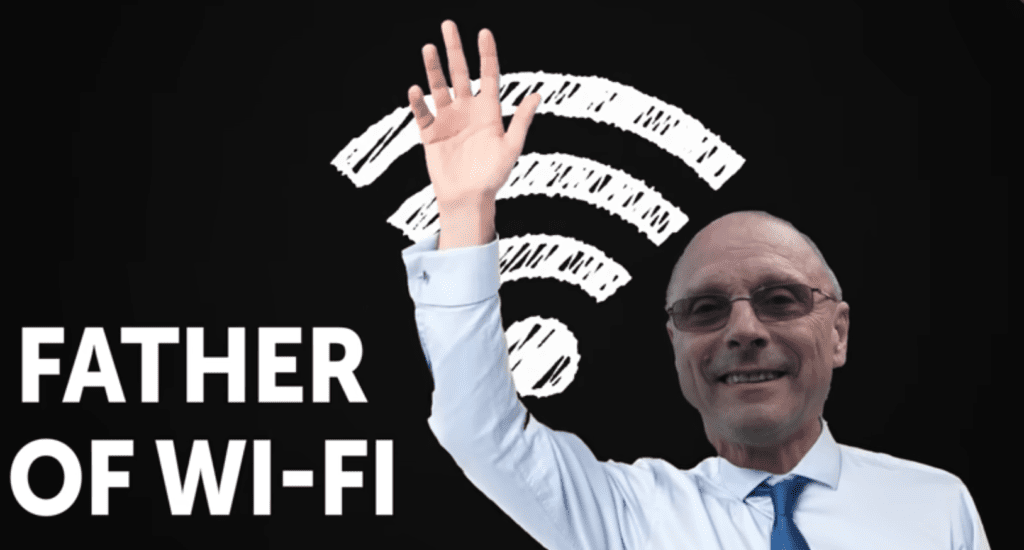
Go on twenty years further to the 1990s. Dr. O Sullivan and his associates were now faced with a novel problem of developing wireless networks among computers. One of the worst setbacks was that radio messages were reflected off all surfaces, including walls, furniture, etc. and thus they could hardly be relied upon. Someone recalled those old and forgotten equations back from the black hole project. They shook them off, placed them on the issue of transmitting data, and it worked. The unsuccessful experiment of decades ago proved to be the key towards the invention of Wi-Fi which we use on a daily basis.

What Does "Wi-Fi" Even Mean?
The original version of the technology was complete by 1997. It received a highly technical name of 802.11. The organization that created the name, the Wi-Fi Alliance, soon understood that it should have something a little more catchy. You can even go into a coffee shop and request them to give you the 802.11 password.
They contracted a marketing company which came up with Wi-Fi. Most people thought that it was WIFI, or wireless fidality, which was not exactly the case. It was merely a pun on Hi-Fi which was a term applied to high-quality audio. It does not represent anything it was just a good sound that was easy to keep in mind.
How It All Works
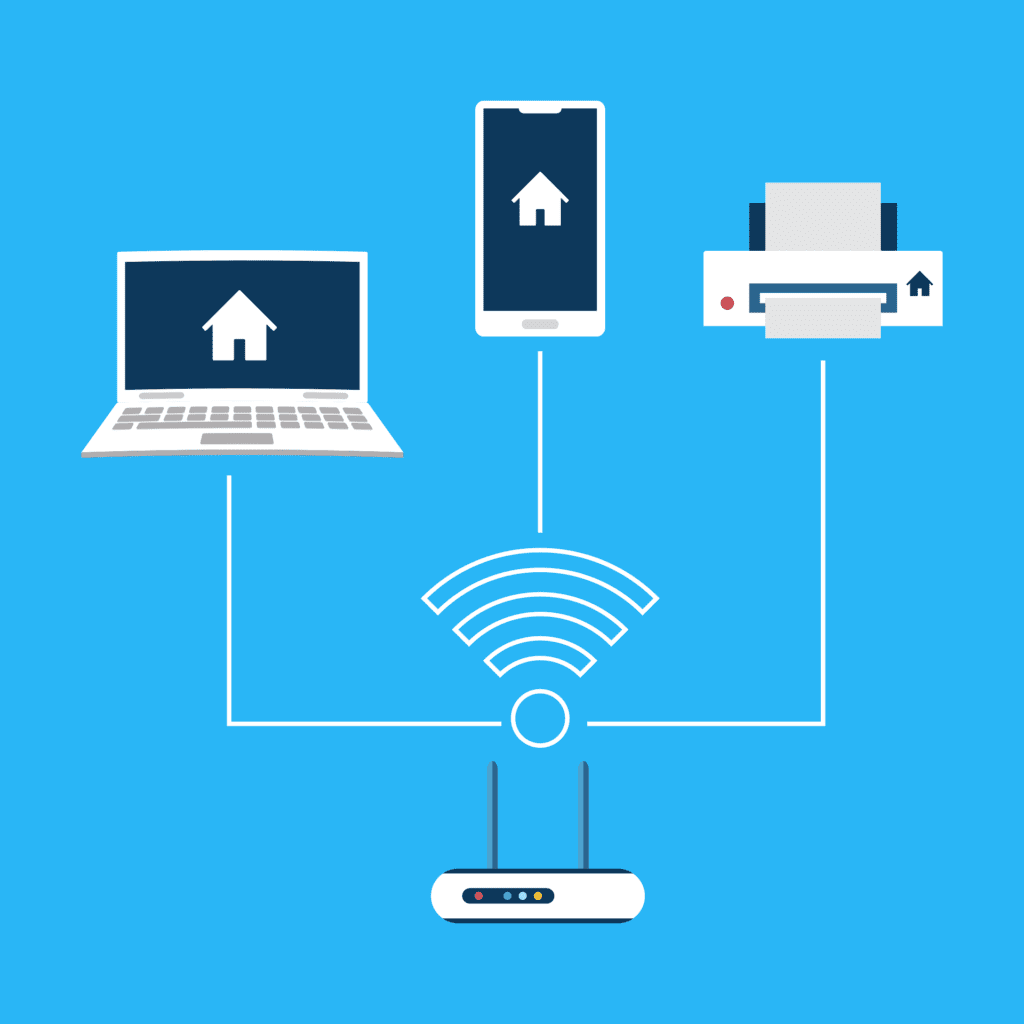
Then, what is going on when you are connected to Wi-Fi? In layman’s language your router is communicating with radio waves.
When you want to send an email message or watch a video, however, that data is first converted into binary code-a language of 0s and 1s. This code is further translated into radio wave frequencies. The information is dispatched into tiny bites, or packets, which are airborne to your device. These packets are then quickly reassembled by your phone or computer and in a matter of time video awards, or the email comes up.


The bandwidth: 2.4GHz vs. 5Ghz: What's the difference?
You have likely encountered these two choices of your home network. The Wi-Fi uses the two major frequencies.
2.4 GHz: It is more powerful and has a higher distance, more able to penetrate solid bodies such as walls. It is slow though and may become congested. The frequency is also utilized in many home appliances such as microwaves and cordless phones, and also baby monitors and this will interfere with your connection and slow down.
5 GHz: This one is much faster not a whole lot of range. Since it consists of a not so heavy frequency with more channels, you have fewer chances of being distorted by other devices. It works well in streaming movies or even gaming when you are not much far away form your router.
Is It Safe?
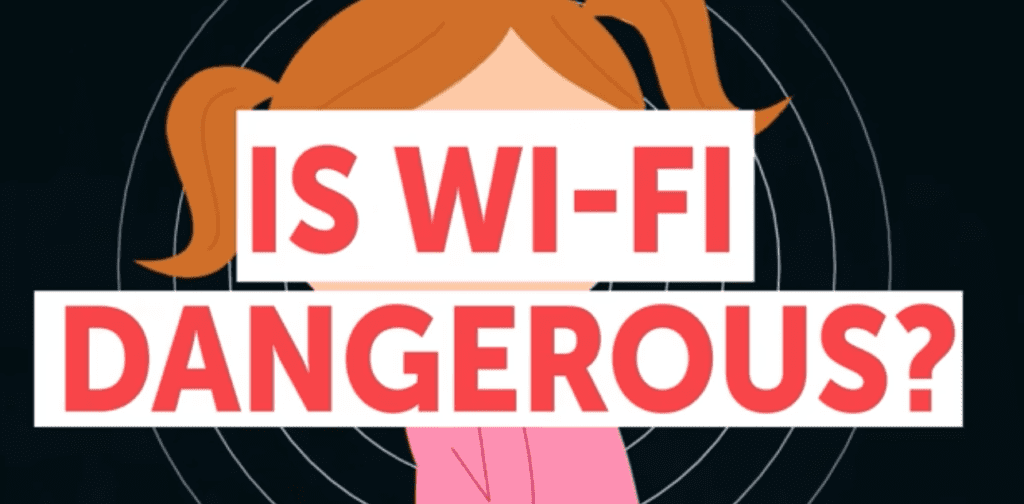
Having invisible signals everywhere, the question of whether there is any danger to our health arises. Major health organizations, such as the World Health Organization, would say no to this.
Wi-Fi involves minimal power, non-ionizing radiation. These are waves that are not severe enough to damage human cells. As an example, the ultraviolet (UV) radiation of the sun is a form a ionizing radiation that is much more powerful and may be dangerous. You have been spending more radiation on a sunny day outside than being beside your Wi-Fi router.
From Dial-Up to Do-Everything
When you next turn on a song to stream, or enter a video conference and do so without a second thought, find a minute to see the path that this technology has taken. Having been created in wartime out of an invention by a movie star, to dry-dust mathematics of an unsuccessful astronomy space project, the history of Wi-Fi is a classic study of how, in the most unlikely of locations, innovation can be derived. It has transformed totally the way we work, play, and even associate with one another without even a single wire in sight.